
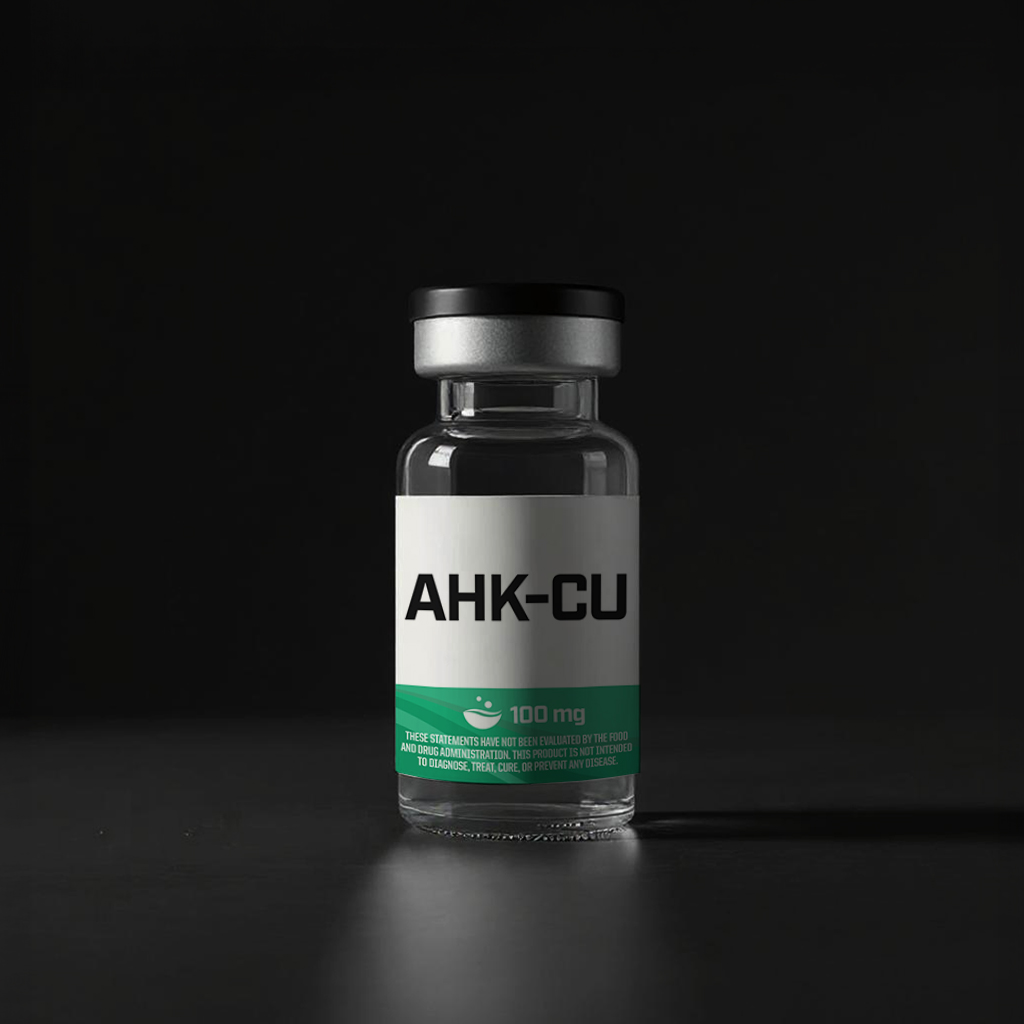
AHK-Cu is a research-grade peptide–metal complex consisting of the tripeptide AHK (Alanine–Histidine–Lysine) bound to copper ions. Due to its molecular structure and copper-binding properties, AHK-Cu is commonly utilized in analytical and formulation-based laboratory research involving peptide stability, coordination chemistry, and metal–peptide interaction analysis.
Structural and Chemical Characteristics
AHK-Cu belongs to a class of copper-associated peptide complexes studied for their coordination behavior and structural stability under controlled laboratory conditions. The histidine residue within the peptide sequence contributes to copper ion affinity, allowing researchers to investigate binding dynamics, degradation profiles, and solution stability across various analytical environments.
Its relatively small molecular size and peptide-based composition make AHK-Cu suitable for a wide range of in-vitro analytical techniques and experimental modeling applications.
Laboratory Techniques and Evaluation
AHK-Cu is commonly examined using research-based analytical methods such as:
- High-performance liquid chromatography (HPLC)
- Mass spectrometry (MS)
- UV-Vis spectroscopy
- Stability-indicating assays
- Structural characterization protocols
- Peptide purity analysis
These methods help assess molecular identity, purity, structural consistency, and degradation behavior during experimental procedures.
Research-Grade Quality Standards
Our AHK-Cu is third-party tested and verified to be ≥99% pure, supporting consistency and reliability for laboratory research applications. Each production batch undergoes quality control and analytical verification to help ensure compliance with research-grade specifications and experimental reproducibility.
Storage and Laboratory Handling
Proper laboratory handling and storage procedures are recommended to preserve peptide integrity and minimize degradation. Researchers typically store peptide compounds under controlled temperature and light-protected conditions to maintain analytical stability over time.
Reviews
There are no reviews yet.