
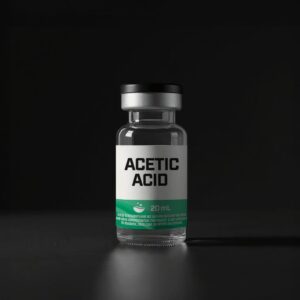
Acetic Acid is a dilute aqueous formulation of acetic acid commonly utilized in biochemical, molecular biology, and analytical laboratory environments. As a weak organic acid, acetic acid is widely used for pH adjustment, buffer preparation, sample processing, and chemical synthesis applications across a broad range of research protocols.
Chemical and Physical Properties
Acetic acid is a colorless organic compound with the molecular formula CH₃COOH. In dilute aqueous solutions, it functions as a mild acid capable of modifying pH conditions while maintaining compatibility with numerous laboratory procedures and biomolecular systems.
A 0.6% aqueous solution is frequently employed in research settings where controlled acidity and gentle chemical treatment are required.
Molecular Biology Applications
In molecular biology laboratories, dilute acetic acid solutions may assist in nucleic acid isolation workflows and precipitation techniques. Researchers also utilize acetic acid in electrophoresis-related protocols and biomolecule purification procedures where precise pH conditions are required.
Protein and Cellular Research
Acetic acid can be used in protein precipitation methods and cellular extraction procedures designed to isolate or stabilize biological components for downstream analysis. Its mild acidic properties make it useful in protocols involving protein denaturation, peptide handling, and biomolecular separation.
Histology and Analytical Chemistry
Within histology and microscopy applications, acetic acid solutions are often incorporated into fixation and staining procedures. In analytical chemistry, acetic acid serves as a reagent and solvent modifier in chromatography, titration, and chemical synthesis workflows.
Laboratory Handling Considerations
Although dilute, acetic acid solutions should still be handled using standard laboratory safety procedures. Appropriate protective equipment and storage conditions are recommended to minimize irritation and maintain reagent integrity.
Research and Laboratory Applications
Acetic acid aqueous solutions are commonly used in:
- Protein precipitation and purification protocols
- DNA and RNA extraction procedures
- Cell lysis and sample preparation
- Buffer and reagent formulation
- Histology and tissue staining workflows
- Chromatography and analytical chemistry methods
- pH adjustment in biochemical assays
- Cleaning and decontamination of laboratory surfaces and instruments

Reviews
There are no reviews yet.