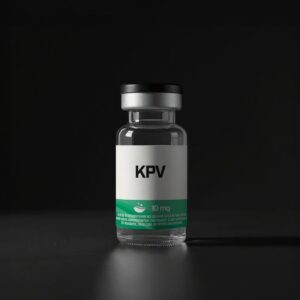
KPV is a synthetic tripeptide composed of the amino acids Lysine–Proline–Valine and corresponds to the C-terminal active sequence of Alpha-melanocyte-stimulating hormone. It has gained significant interest in preclinical research due to its potential role in inflammatory regulation, epithelial barrier support, and immune signaling pathways.
Structural and Biological Background
KPV is derived from α-MSH, a naturally occurring neuropeptide involved in melanocortin signaling and immune regulation. Although much smaller than the full α-MSH peptide, KPV appears to retain several biologically relevant anti-inflammatory properties while exhibiting a simplified peptide structure suitable for laboratory investigation.
Mechanism of Action
Research suggests that KPV may modulate inflammatory signaling pathways through interactions associated with melanocortin receptor activity and cytokine regulation. Experimental findings indicate that KPV may influence cellular responses involved in:
Pro-inflammatory cytokine expression
Immune cell signaling
Oxidative stress response
Epithelial barrier integrity
Cellular inflammatory cascades
KPV has also been studied for its ability to reduce inflammatory signaling independent of steroid-based pathways, making it a molecule of interest in immunology and gastrointestinal research models.

Reviews
There are no reviews yet.